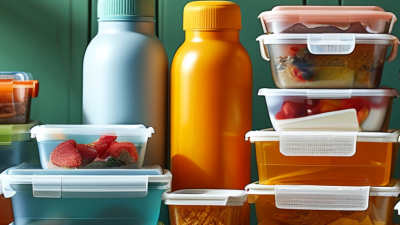
When buying food packaging in bulk, it's not just about picking something that looks good on paper. You need containers that really protect your products, help keep your daily operations smooth, and match your sustainability goals. Choosing an Eco Food Container isn’t just a matter of materials — it can actually influence how you portion, store, and deliver food, not to mention the first impression customers get. Imagine a container that seems responsible but ends up leaking during a hectic lunch rush — definitely not ideal.
In this guide, we’ll walk through some practical options for bulk buying, like molded fiber, paper-based packaging, and reusable containers. Each has its own perks. You'll want to check out things like capacity, how the lids close, stacking stability, and how well they perform with hot, cold, or oily foods. Don’t forget to ask your suppliers for detailed specs and samples — then actually test them out with your menu items and how you handle them day-to-day. Little things matter — for example, a lid that pops open during transit can throw off all your careful planning.
And, of course, cost is an important factor. But keep in mind, the unit price isn’t the whole story. Storage needs, speed of packing, breakage rates, and disposal costs all add up. For example, a food container might be perfect for dry or takeaway foods, but maybe not so great for soups or ready-to-eat meals. Also, if claims about recycled content or compostability are important to you, make sure to verify them with clear documentation from your suppliers and think about whether your facilities can handle those materials. Availability and actual performance can vary quite a bit.
Honestly, there’s no one-size-fits-all answer here. Sometimes, the most eco-friendly option on paper doesn’t turn out to be the best fit for your operation. The sections ahead will give you a practical comparison — helping you ask better questions, weigh the pros and cons, and pick packaging options that really work for your business.
In the end, it’s about finding that balance between practicality and sustainability — no easy feat, but with the right info, you’ll be making smarter choices.
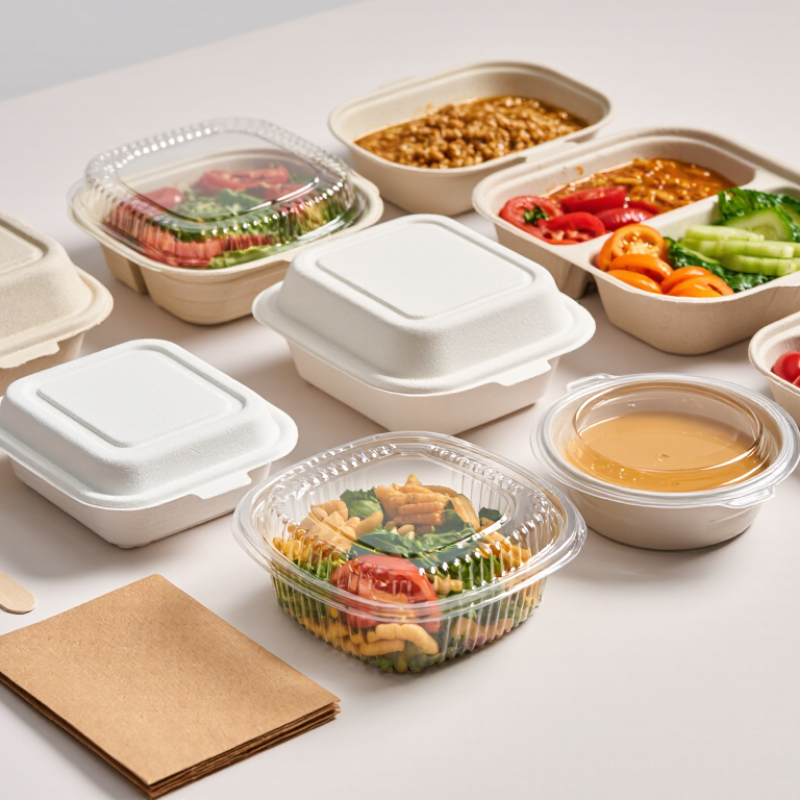
Understanding Eco-Friendly Food Containers and Their Materials
For wholesale buyers, “eco-friendly” is not a material category; it is a claim to examine.
OECD’s Global Plastics Outlook (2022) reports that packaging generated about 40% of global plastic waste in 2019. That figure makes packaging choices consequential, but it does not prove that every alternative is better.
Recycled-content paper can reduce demand for virgin fiber, while molded fiber offers a sturdy shape for takeaway meals.
Yet wet foods may need a barrier coating, which can complicate recycling or composting.
Details matter.
Plant-based plastics, such as PLA, are often marketed as compostable. They generally need specific industrial composting conditions, not a backyard bin. A label alone is not enough.
The United Nations Environment Programme’s Turning off the Tap report (2023) notes that packaging accounts for a large share of global plastic use, underscoring the value of reducing unnecessary material.
For buyers comparing samples, check the full construction: base, lid, lining, and inks.
Test a hot, oily meal and leave it packed for the actual delivery time.
Small leaks matter. So does a soggy rim.
A container may perform well in a test kitchen yet fail on a crowded delivery route.
There is no perfect material; local collection and processing can change the practical outcome.
Comparing the Main Types of Sustainable Food Packaging
Top Eco Food Containers for Wholesale Buyers
Comparing the Main Types of Sustainable Food Packaging
Molded-fiber containers suit takeaway meals with sauces, grains, or sliced fruit. They feel sturdy in the hand, though steam can soften some designs. Paper-based packaging has a strong recovery record: the US Environmental Protection Agency reported a 68.2% recycling rate for paper and paperboard in 2018. That figure covers many paper products, not just food containers. Buyers should check whether coatings or food residue affect local recycling options.
Bagasse and other plant-fiber containers are often marketed as compostable. But compostability depends on access to suitable facilities, and a compostable label alone does not guarantee acceptance. Ask suppliers for test documentation and confirm local processing requirements. Small detail, big difference. For hot, oily dishes, test for leaks and lid fit after several minutes—not just straight from the sample box.
Reusable containers can reduce single-use packaging when collection, washing, and return systems work well. They may be a poor fit for dispersed customers or limited washing capacity. OECD reported that packaging accounted for 40% of plastic waste generated in 2015, highlighting why material choice matters. Still, replacing plastic with fiber is not automatically better in every setting. Compare weight, transport distance, food protection, and realistic end-of-life routes before ordering wholesale.
Evaluating Performance, Safety, and Environmental Impact
Wholesale buyers should assess a Food Pack Container under real service conditions, not just from a product sheet. Test it with hot soup, oily food, and a damp lid. Check for leaks after stacking and for softening during delivery. A container that performs well with salad may fail with curry. Food-contact safety also deserves documented attention: request material specifications and applicable migration-test results, then confirm they match the intended food and temperature. A neat sample is not enough.
Environmental claims need the same scrutiny. The OECD’s Global Plastics Outlook reports that global plastic production reached 460 million tonnes in 2019, while only 9% of plastic waste was recycled. That context makes end-of-life claims important, but “compostable” does not guarantee a local facility can process the item. Ask what infrastructure accepts it and whether coatings or mixed materials complicate sorting. UNEP estimated that 11 million tonnes of plastic enter aquatic ecosystems each year. These figures describe a broad waste challenge, not the impact of one container. Still, comparing material weight, recycled content, reuse potential, and disposal access can improve purchasing decisions. Imperfect data remain common; record what suppliers can verify.
Choosing the Right Containers for Different Food Service Needs
Wholesale buyers should match containers to food temperature, moisture, travel time, and serving style. A Paper Container Food option may suit bakeries, cafés, and takeaway counters. Hot soups need strong walls, secure lids, and controlled venting. Without ventilation, trapped steam can soften paper and damage presentation. Fit matters more. A 2024 report from the United Nations Environment Programme estimates that 1.05 billion tonnes of food were wasted in 2022. Better-fitting containers may help protect portions during transport and reduce avoidable spills.
For salads, fruit, and chilled meals, prioritize visibility, stackability, and moisture resistance. Clear lids help staff check orders quickly. Grease-resistant interiors are useful for fried foods, but buyers should test coating performance with hot oil. Compostable claims also require careful review. The Sustainable Packaging Coalition notes that disposal infrastructure varies widely across regions. A container labeled compostable may not break down in a local facility. That gap deserves attention.
Run practical trials before placing a large order. Fill containers with actual menu items, then hold them for the longest expected delivery period. Tip each box, stack several units, and inspect the base for leaks. For sauces, test separate compartments or tightly sealed cups. For large catering orders, consistent dimensions improve pallet use and reduce warehouse handling. I have seen attractive samples fail after twenty minutes with oily noodles. The lesson is uncomfortable: appearance alone proves little. Request food-contact documentation, temperature guidance, recycled-content details, and independent test results before approval. Suppliers should also explain minimum order quantities and replacement procedures when packaging arrives damaged.
Top Eco Food Containers for Wholesale Buyers
Choosing the right container depends on temperature resistance, leak protection, transport durability, end-of-life options, and suitability for the food-service application. The 1–5 scores below are practical selection benchmarks based on commonly documented material properties, not company or brand data.
Score guide: 1 = limited suitability, 5 = strong suitability. Fiber containers perform well for dry and takeaway foods, recycled PET is suitable for chilled foods, reusable polypropylene is effective for meal programs, and aluminum is strong for heat-intensive applications.
Assessing Wholesale Pricing, Minimum Orders, and Supplier Reliability
Top Eco Food Containers for Wholesale Buyers
Wholesale buyers should compare landed cost, not the unit price alone. Add tooling, freight, customs, storage, and expected defect rates. A container quoted at $0.18 may reach $0.27 after delivery. Minimum order quantities also matter. A 50,000-unit order can reduce pricing, but it may leave small kitchens with unused stock. Request price breaks at 5,000, 25,000, and 50,000 units. The 2023 Global Buying Green Report surveyed 5,000 consumers and found that 82% would pay more for sustainable packaging. Demand exists, but buyers should not overpay without measurable performance.
Ask suppliers for material specifications, food-contact declarations, migration-test results, and recent quality records. For recycled or fiber-based products, check moisture resistance beside compostability claims. A damp container is a costly failure. Request production samples from different batches, not only one polished sample. I learned this the hard way. One sample rarely reveals sealing problems, warped lids, or inconsistent wall thickness.
Reliability needs evidence.
Track quoted lead time, actual dispatch dates, response speed, and replacement procedures. A practical trial order can test these points before a larger commitment. The 2022 Supply Chain Resilience Report from the Chartered Institute of Procurement and Supply reported continuing disruption across global supply networks, making backup capacity important. Ask whether the supplier has secondary raw-material sources and documented inspection steps. Certifications help, but they do not replace independent checks. Pricing still needs scrutiny. Eco claims need it even more.
Checking Certifications, Regulations, and Composting Requirements
Choosing eco containers for wholesale requires more than a recycled-looking label. I inspect food-contact declarations, test reports, and traceability records before approving a supplier. Materials must meet applicable food safety rules, including limits on chemical migration. Ask for current documents. Certificates should match the exact product, coating, lid, and production site. A certificate for raw material may not cover finished Food Container Packing. Independent laboratory reports and recent audits provide stronger evidence than marketing claims.
Compostability needs careful checking. “Compostable” may mean industrial composting only, where heat, moisture, and controlled timing are available. Home composting claims need separate evidence. Look for standards such as EN 13432 or ASTM D6400, then verify the certification scope. Local waste operators should also accept the item. Regulations differ by country, state, and municipality. A container that passes one market may fail another. This is where wholesale planning often becomes uncomfortable.
I once treated a compostable claim as a complete purchasing decision. It was not. The lid used a different material, and the local facility rejected both pieces. Now I request full component data, disposal instructions, and migration results. I also test samples with hot soup, oily food, and cold storage. Small failures become expensive at pallet scale. Keep records for every batch. Avoid unclear green wording. Buyers should confirm labeling, recycling symbols, and restricted-substance requirements before shipment. Honest uncertainty is useful; ask what the certificate does not cover.
Planning Storage, Shipping, and Inventory for Bulk Purchases
Bulk buying changes the container decision from unit price to system design. The OECD’s Global Plastics Outlook (2022) reports that packaging creates about 40% of global plastic waste. For wholesale buyers, material choice must meet product safety, stacking, and disposal plans. A Bagasse Food Container can suit prepared foods, but moisture exposure and compression require testing. Store cartons on pallets, above the floor, away from condensation. Keep temperature notes near the receiving area.
Shipping deserves careful calculation. Measure packed carton height, not only container dimensions. Leave clearance for pallet wrapping and forklift handling. The World Bank’s What a Waste 2.0 estimates 2.01 billion tonnes of municipal solid waste arise globally each year. That figure makes avoidable packaging volume a commercial concern, not merely an environmental one. Use carton dividers, consistent case counts, and a small damage allowance. Too much protection raises freight costs. Too little creates leakage claims.
Inventory planning should connect forecasts with shelf life and reorder points. Record cases received, damaged units, and weekly usage by storage location. Rotate stock by earliest purchase date when dates differ. It is not perfect. Demand can shift after one rainy weekend or a menu change. A pilot order covering 5–10% of planned volume can reveal lid fit, stacking, and condensation problems before major capital is committed. Review results with warehouse and food-safety staff. Reliable purchasing is measured after delivery, not at checkout.
FAQS
“Eco-friendly” is a claim, not a material category. Compare material weight, recycled content, reuse potential, and local disposal access. Details matter.
Recycled paper can reduce demand for virgin fiber. However, wet foods may need coatings that complicate recycling. The result is not always better.
Usually, no. Some plant-based plastics require industrial composting conditions. Check local facilities before trusting the label.
Use hot soup, oily meals, and damp lids. Stack filled containers and test them for the actual delivery time. Small leaks matter.
Curry may add heat, oil, moisture, and longer contact time. These conditions can soften materials or expose weak seals. Testing must match real meals.
Request material specifications and relevant migration-test results. Confirm they match the intended food and temperature. A neat sample proves little.
Keep cartons on pallets, above the floor, and away from condensation. Record temperature near the receiving area. Storage mistakes happen.
Measure packed carton height, including pallet wrapping space. Use dividers and consistent case counts. Too much protection raises freight costs.
Begin with a pilot order covering about 5–10% of planned volume. Check lid fit, stacking, condensation, and damage after delivery. Review the results honestly.
Conclusion
Choosing the right Eco Food Container is essential for food-service businesses seeking practical sustainability and reliable wholesale value. This guide explains common materials such as molded fiber, paperboard, bioplastics, and reusable options, while comparing their strength, heat resistance, leak protection, safety, and environmental trade-offs. It also shows how different formats suit takeaway meals, fresh produce, sauces, desserts, and catering applications.
Wholesale buyers will learn how to evaluate unit pricing, minimum order quantities, supplier consistency, lead times, and quality control before committing to bulk purchases. Special attention is given to food-contact certifications, regional regulations, composting conditions, labeling, and proper disposal requirements, since environmental claims must match real-world facilities. Finally, the guide covers storage space, moisture protection, shipping efficiency, stock rotation, and inventory planning, helping businesses reduce waste, avoid shortages, and select packaging that balances performance, compliance, cost, and sustainability.
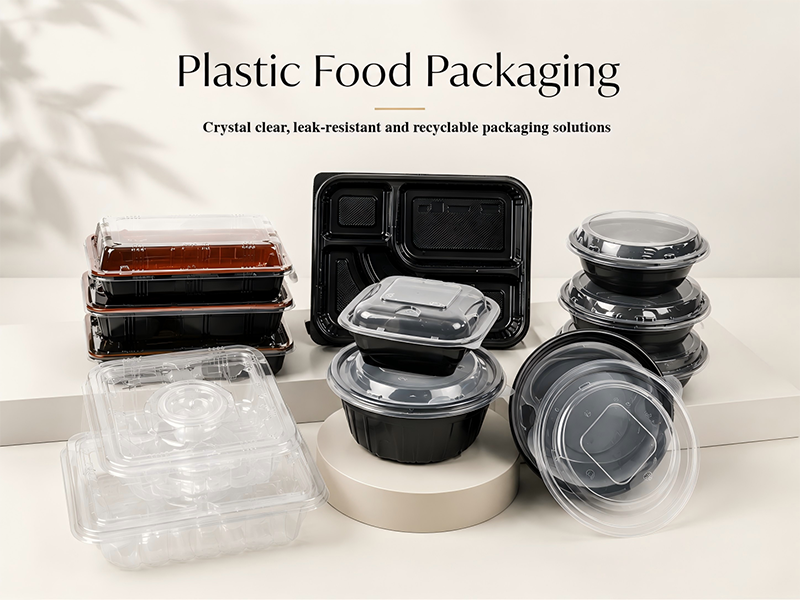 Plastic Food Packaging
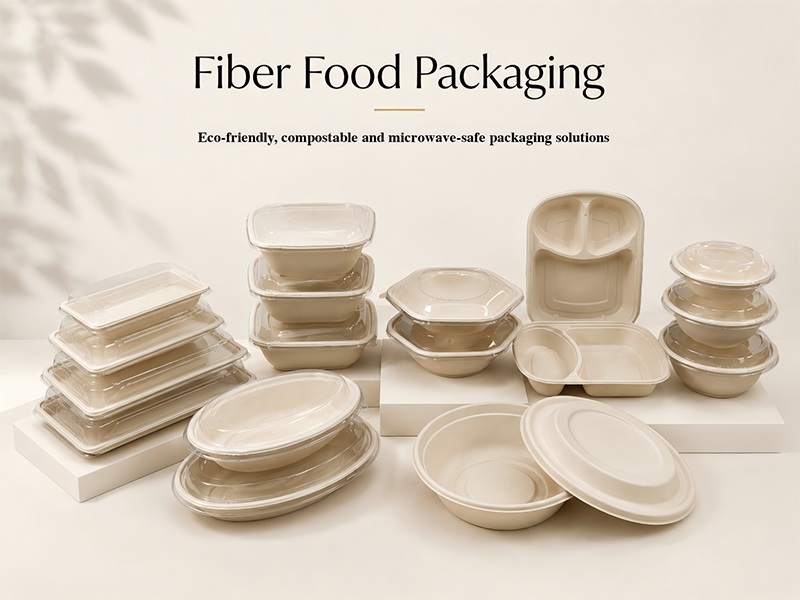 Fiber Pulp Food Packaging
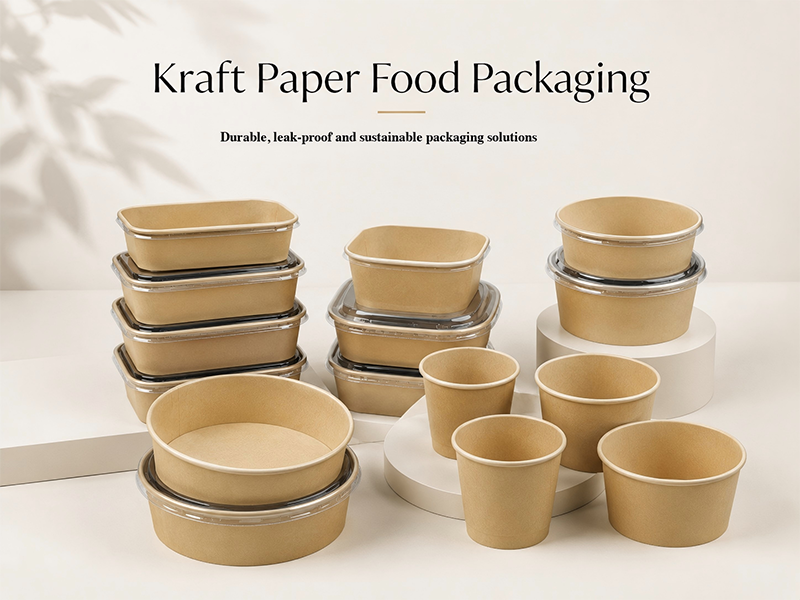 Kraft Paper Food Packaging
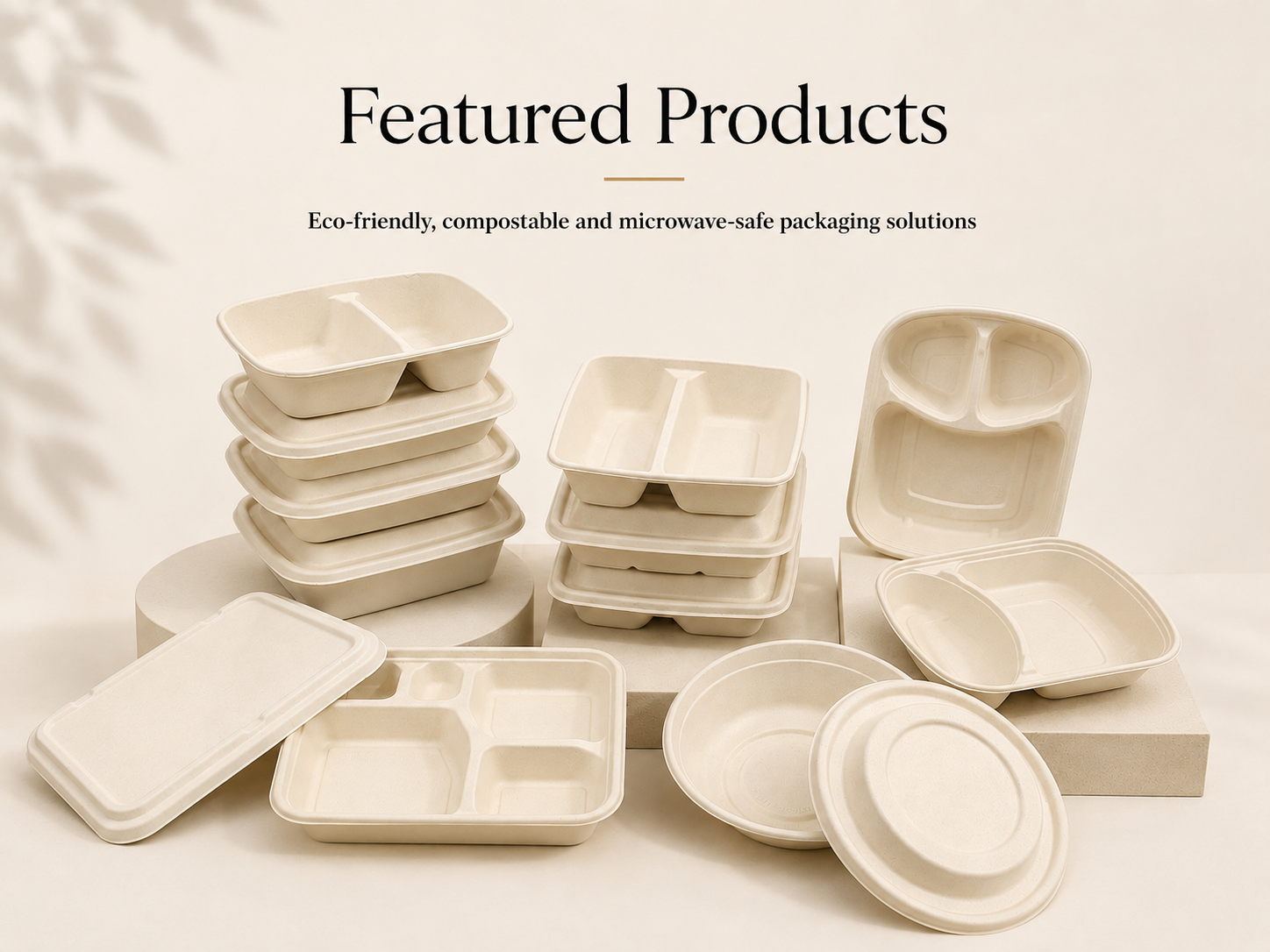 Featured Products
 +86 18024107061
 Contact via email