Leave Your Message
0%

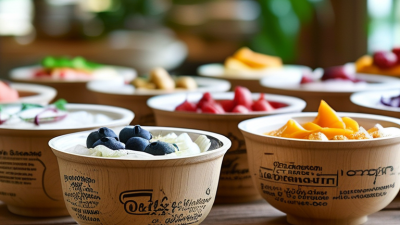
Picking Eco Food Packaging isn’t just about choosing a pretty design. It’s a decision that impacts product safety, customer trust, shipping costs, and what ends up as waste once the customer’s done. Honestly, a good starting point is to look at the food itself. Different foods—like hot soups, greasy noodles, frozen meals, or dry baked goods—call for different packaging materials. Sure, paper seem responsible and eco-friendly, but it can really struggle when moisture hits it. Adding a thin coating might fix that, but then it can get tricky when you’re trying to recycle it all later on.

For business owners, it’s super important to take a step back and look at the whole packaging process—from start to finish. Ask your suppliers about what materials they’re using, any official food-contact safety info, test results, and disposal instructions. It’s a good idea to compare options like recycled paper, molded fiber, compostable films, reusable containers, and recyclable plastics. And don’t just rely on what’s on paper—test things in real-world conditions: how they handle heat, pressure, refrigeration, and being jostled around during delivery. If a package leaks in the delivery bag, that’s definitely not the kind of 'sustainable' you want.

Details really do matter here.

When chatting with suppliers, always ask for actual samples—not just photos. Try stuffing hot curry into the container and leave it for half an hour. Stack filled boxes overnight. Check for any weird odors, stains, lid fit, or if the labels stay put. These quick tests can reveal problems early on. But don’t forget—small trials aren’t a substitute for proper certification tests and official compliance checks. Claims like “green” or “biodegradable” also need solid proof. Nothing is perfect—recyclable packaging might require more energy to produce, and compostable options might not be accepted everywhere. The key is finding a balanced choice that considers environmental impact, keeps food safe, meets customer expectations, and aligns with local waste systems.

This guide is here to help you compare those factors clearly, spot the flashy claims that aren’t backed up, and choose Eco Food Packaging that actually works—beyond just looking good in a product photo.
How to Choose Eco Food Packaging for Your Business?

Defining Your Business’s Eco-Friendly Packaging Requirements

Defining your eco-friendly packaging requirements starts with the product, not the material. Record portion size, temperature, moisture, grease, shelf life, and delivery distance. A soup container needs different protection from a dry snack pouch. Ask how customers will dispose of it. Local collection systems matter more than attractive environmental claims.

The UNEP reports that packaging uses about 36% of all plastic produced globally. The OECD found that only 9% of plastic waste was recycled in 2019. These figures make material reduction important, but reduction alone can create problems. Weak packaging may increase leaks, returns, and food waste. The UNEP Food Waste Index Report 2024 estimated that households wasted over one billion tonnes of food in 2022. Protection has a climate value too.

Test real conditions. Fill sample packs, stack them, chill them, and shake them during delivery. Measure failure rates, material weight, and product shelf life. Check whether nearby facilities accept the chosen format. “Compostable” is not automatically practical. It may require commercial composting that customers cannot access. Our first choice may be wrong. That is useful information. Revisit the design after customer feedback and disposal data. A simple requirement sheet should record performance, recycled content, food-contact safety, end-of-life options, and verified supplier evidence. Industry data can guide decisions, but your own packaging trial reveals the risks that spreadsheets miss.

Comparing Sustainable Packaging Materials and Their Properties

Choosing eco food packaging starts with comparing material properties, not chasing a single “green” label. The United Nations Environment Programme reported in 2023 that global plastic production exceeds 430 million tonnes annually, with about two-thirds used briefly. This makes packaging design and disposal conditions important.

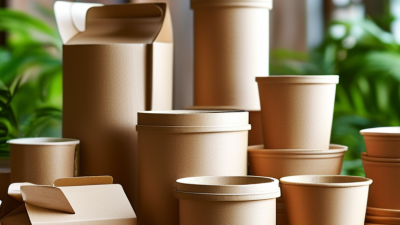
Recycled paperboard is lightweight, printable, and widely accepted in existing recycling systems. However, grease and moisture can reduce its recyclability unless coatings are carefully selected. Eurostat reported an 82.5% recycling rate for paper and cardboard packaging in the European Union in 2022. That figure is encouraging, but local collection systems still vary. Molded fiber offers a useful alternative for trays and bowls. It handles heat reasonably well, yet it may soften with wet foods.

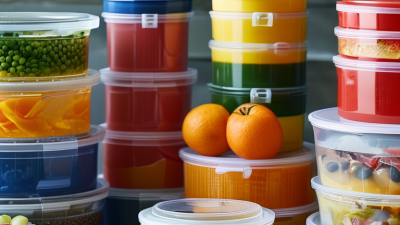
Glass provides strong barrier protection and does not absorb flavors. It is also heavy, increasing transport emissions. Aluminum protects food from light and oxygen, while the International Aluminium Institute reports that recycling aluminum uses about 95% less energy than producing primary metal. Compostable plastics sound attractive, but many require controlled industrial composting facilities. They may not break down in home compost or ordinary landfill conditions.

A practical trial should test leakage, stacking, temperature, and disposal routes. The uncomfortable part is that no material wins everywhere. My first instinct might favor fiber, but a soggy container can create more waste through rejected products. Packaging choices need evidence, not assumptions.

Evaluating Packaging Performance, Safety, and Product Compatibility

Choosing Eco Friendly Food Packaging requires more than selecting a recyclable-looking container. Evaluate performance, safety, and product compatibility under real service conditions. Fill sample packages with your actual food, not water alone. Hot soup may soften fiber, while oily sauces can weaken seals. Test stacking, transport vibration, and short refrigeration cycles. A package that looks sturdy on a counter may fail inside a delivery bag.

Food safety needs documented material information and migration testing from qualified laboratories. Confirm that the packaging suits the food’s temperature, acidity, moisture, and fat content. Check seals after filling, closing, and reheating. Watch for leaks, odor transfer, color changes, or surface breakdown. These small details affect customer trust. I have found that “compostable” does not automatically mean suitable for every product or disposal system. That assumption needs challenging.

Tips: Build a simple test sheet with temperature, holding time, seal condition, and visible changes. Compare empty and filled samples after handling. Ask suppliers for clear specifications, test reports, and storage guidance. Keep evidence for each packaging decision. Also, measure real waste after launch; predictions can be wrong. If performance drops during busy periods, redesign the format instead of blaming staff. Good Eco Friendly Food Packaging should protect the meal first, then reduce environmental impact without creating new waste.

How to Choose Eco Food Packaging for Your Business?

Representative oxygen transmission rates for common packaging materials

Lower oxygen transmission generally indicates better protection against oxidation and can support a longer shelf life for oxygen-sensitive foods. The values shown are representative mid-range figures measured under typical laboratory conditions of approximately 23°C and 50% relative humidity; actual performance varies with thickness, coating, humidity, sealing quality, and package structure.

Before selecting a material, confirm food-contact safety and migration compliance for the target market, then check compatibility with the product’s acidity, fat content, moisture level, filling temperature, and expected storage conditions. “Eco-friendly” materials still require performance and safety validation.

Checking Environmental Certifications and Supplier Transparency

Choosing Eco Friendly Fast Food Packaging requires more than reading a green claim on a carton. In practice, I check the certification document before reviewing the design. The certificate should show the exact product, material, testing standard, issuing body, and expiration date. It should also explain where the packaging can be composted or recycled. A package labeled compostable may need commercial composting, not a backyard pile. That difference affects real customer use. Ask for current test reports, recycled-content evidence, and details about inks, coatings, and adhesives. Small details matter.

Supplier transparency reveals what marketing language hides. Request the factory address, production process, material origin, and quality-control records. A reliable supplier should explain how it handles batch changes and failed inspections. It should provide traceable lot numbers on invoices or cartons. I also compare documents with a physical sample. The sample should match the declared thickness, color, texture, and closure strength. Do not rely on photos.

Some suppliers answer quickly but avoid specific evidence. That is a warning sign. I once focused too heavily on certification logos and overlooked unclear disposal instructions. The packaging looked responsible, yet customers could not process it locally. That mistake changed my review checklist. Certification is useful, but it is not proof of perfect sustainability. Keep asking practical questions, record every answer, and review the supplier when materials or facilities change.

Balancing Packaging Costs, Branding, and Operational Efficiency

Choosing Eco Friendly Food Packaging Boxes requires more than comparing unit prices. A box that costs 8% more may reduce leakage, returns, or packing time. Measure total cost instead. Include material, freight, storage, labor, and disposal fees. A 2023 Global Buying Green Report found that 82% of consumers would pay more for sustainable packaging. However, willingness does not remove price sensitivity. Your packaging still needs a clear financial purpose.

Branding must work within operational limits. Use one strong color, readable panels, and a compact logo area. Avoid coatings that slow recycling or create extra production steps. Test the box with real meals, sauces, cold storage, and delivery stacking. Check whether staff can assemble it quickly during a lunch rush. A ten-second delay per order becomes expensive at scale. Small details matter. A loose lid can damage both food and reputation.

Start with a limited pilot, not a full conversion. Compare damage rates, packing minutes, customer comments, and reorder costs for four weeks. The Sustainable Packaging Coalition emphasizes designing packaging for real recovery systems, not just attractive claims. That requires checking local collection facilities before printing environmental messages. One honest warning: fiber packaging is not automatically efficient or sustainable. It may absorb moisture, need extra material, or fail during transport. Reconsider weak assumptions. A slightly heavier box could perform better, while a cheaper option may create hidden waste and labor costs.

How to Choose Eco Food Packaging for Your Business? - Balancing Packaging Costs, Branding, and Operational Efficiency

Comparison of commonly used lower-impact food packaging formats. Costs and performance figures are indicative planning ranges for standard food-service applications and should be confirmed with suppliers through product-specific testing.

Packaging Format Typical Food Applications Indicative Unit Cost (USD) Typical Weight per Unit Recycled or Renewable Content Moisture and Grease Barrier Branding Flexibility Production-Line Compatibility End-of-Life Considerations Operational Efficiency Best-Fit Business Use
Recycled Paperboard Carton Dry foods, bakery products, cereals, snacks, and takeaway items with an internal liner $0.08–$0.25 25–55 g Typically 60%–100% recycled fiber; certified grades may also use responsibly sourced virgin fiber Moderate; improved with water-based coatings or a separate grease-resistant liner High High; compatible with common carton forming, filling, and automatic sealing equipment Usually recyclable when clean and free from difficult-to-remove plastic or foil laminates High Businesses seeking strong shelf presentation, efficient stacking, and relatively low material cost
Molded Fiber Tray or Clamshell Fresh produce, bakery items, prepared meals, eggs, and food-service portions $0.18–$0.55 35–90 g Usually made from recycled paper fiber, bagasse, bamboo fiber, or other plant-based fibers Moderate; coated versions provide better resistance to oils and liquid foods Medium to High Medium; may require changes to sealing, denesting, or filling equipment Often recyclable or compostable depending on coatings, local facilities, and contamination levels Medium Brands prioritizing a natural appearance, rigidity, and plastic reduction in food-service packaging
Compostable Film Pouch Dry snacks, coffee, grains, powders, and selected short-shelf-life products $0.14–$0.40 8–25 g May contain certified bio-based polymers, cellulose, or other renewable feedstocks Good when correctly specified; oxygen and moisture performance varies substantially by structure High Medium to High; many formats run on vertical or horizontal form-fill-seal equipment after testing Industrial composting may be required; acceptance is not available in every municipality High Lightweight products where low shipping weight and a sustainability-led message are important
Recycled PET Tray or Clamshell Fresh produce, salads, bakery goods, chilled foods, and ready-to-eat products $0.12–$0.38 18–65 g Commonly includes 30%–100% post-consumer recycled PET, subject to food-contact regulations Good visibility and good resistance to moisture; limited protection for oxygen-sensitive products without additional barriers High High; suitable for many existing thermoforming, lidding, and automated packing systems Widely recyclable in many markets, but local collection and sorting capabilities must be verified High Businesses needing product visibility, rigidity, tamper evidence, and minimal equipment disruption
Paper Cup with Water-Based Coating Hot drinks, cold drinks, soups, and liquid takeaway products $0.07–$0.22 10–24 g Paperboard is commonly made with renewable fiber; recycled content depends on food-contact requirements Good for intended service periods; heat, leakage, and grease performance depend on the coating system High High; compatible with standard cup filling, lid-fitting, and service workflows Recyclability depends on whether local facilities accept coated cups and separate the polymer barrier High Food-service operators wanting familiar handling, strong print coverage, and fast customer service
Reusable Polypropylene Container Meal delivery, catering, prepared meals, institutional food service, and closed-loop takeaway programs $0.60–$2.50 70–180 g Durable plastic; recycled content varies by grade and food-contact requirements Very good for repeated use, including many hot, cold, and moist foods Medium Medium; requires washing, reverse logistics, inventory control, and return management Best results depend on high return rates and multiple reuse cycles; recyclable at end of service life where facilities accept PP Medium Businesses with predictable customer returns, concentrated delivery routes, or controlled dining sites
Aluminum Food Tray Ready meals, baked foods, catering portions, and ovenable takeaway products $0.15–$0.55 20–75 g Often contains recycled aluminum; exact content varies by producer and regional supply Very good barrier against light, oxygen, moisture, and grease; suitable for oven applications when specified correctly Medium High; works well with filling, lidding, sealing, and heat-processing operations Highly recyclable where collection systems exist, but food residue should be removed before recycling High Products requiring strong barrier protection, thermal processing, or premium ready-meal performance
Decision rule: Compare total packaging cost rather than purchase price alone. Include filling speed, sealing rejects, product loss, storage space, transport weight, labeling requirements, washing or return logistics, and the availability of local recycling or composting infrastructure.

Measuring Packaging Impact and Improving Your Sustainability Strategy

How to Choose Eco Food Packaging for Your Business?

Choosing Eco Friendly Food Packaging Containers requires more than checking a green label. Measure the complete packaging impact before changing your supplies. Record the material weight, recycled content, manufacturing information, transport distance, and end-of-life options. A lighter container may reduce emissions, but it may also fail during delivery and create food waste.

Small details matter. Define one serving as your comparison unit. Then compare containers by weight, protection, storage space, and disposal route. For a takeaway salad, test whether the lid stays sealed after thirty minutes in a delivery bag. Check whether local facilities actually accept the material. A theoretically recyclable package has limited value when customers cannot recycle it nearby. Ask suppliers for test reports and clear explanations of their environmental claims. Do not guess.

Sustainability also includes daily performance. A container that leaks sauce can damage meals, increase complaints, and require replacement packaging. Run a small workplace trial with staff and customers. Measure damaged units, unused space, cleaning requirements, and customer disposal behavior. Record the results honestly, including failures. Some data will remain incomplete. That is a weakness worth acknowledging, not hiding. Review the findings each quarter, especially after changing portion sizes, delivery routes, or suppliers. Improvement may mean using less packaging, not simply choosing a different material.

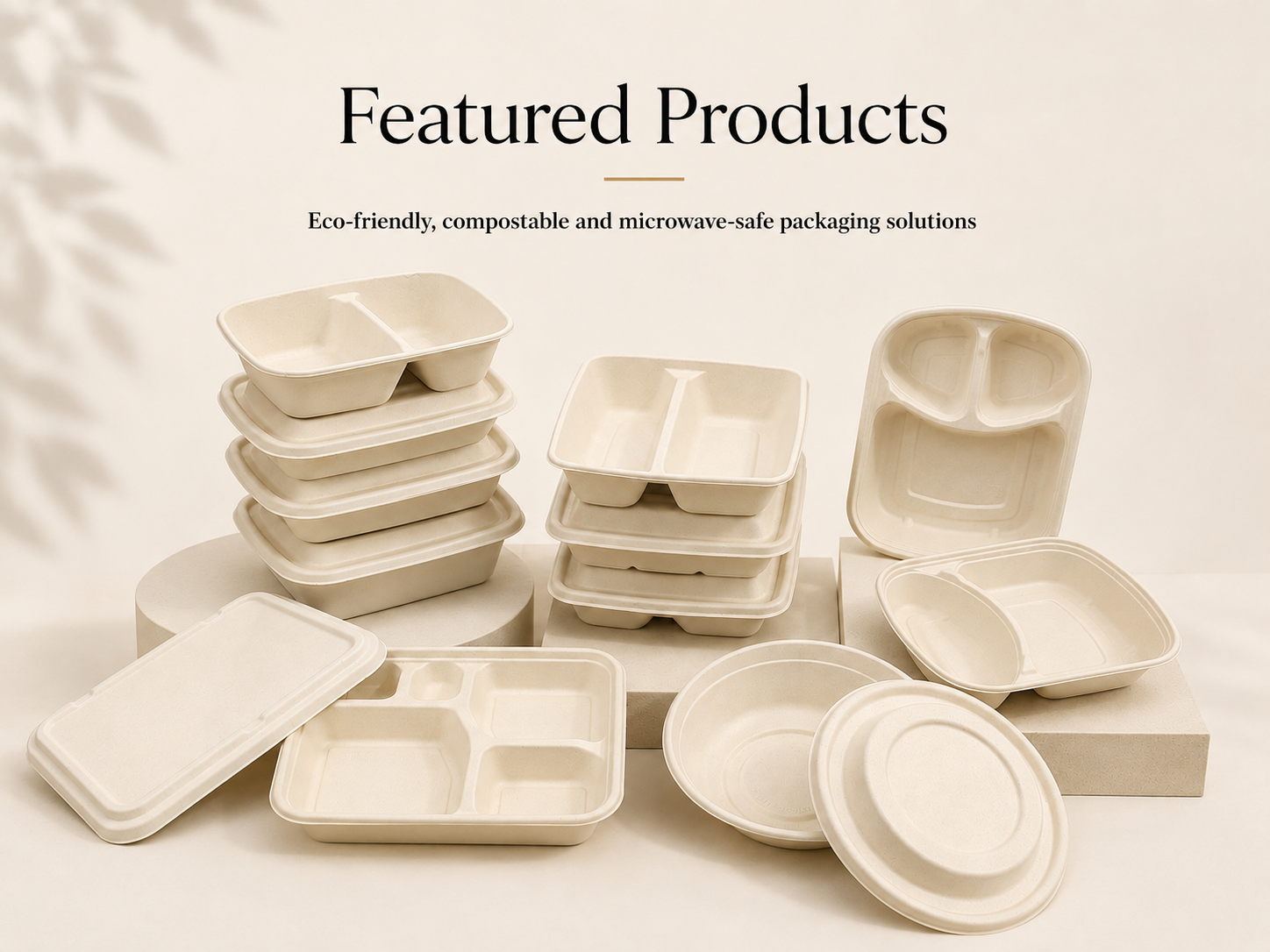
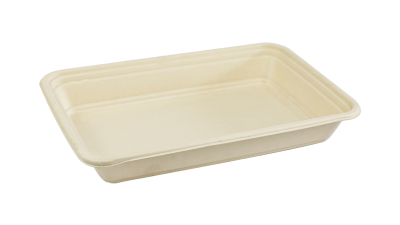
CRT1500 Rectangle Pulp Food Container: A Sustainable Choice for Modern Food Packaging

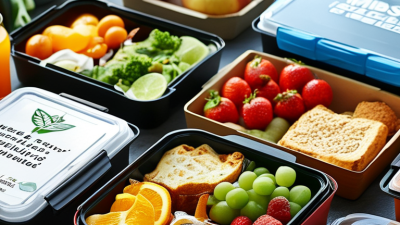
The CRT1500 Rectangle Pulp Food Container offers a practical and more sustainable solution for modern food packaging. Made from natural, renewable bamboo pulp and sugarcane pulp, it combines dependable structure with an eco-conscious material choice. Its generous 1500ml capacity provides ample room for salads, fried rice, snacks, bento meals, and other everyday catering options. The rectangular design also supports efficient packing, storage, and presentation, making it suitable for restaurants, takeaway services, cafés, and event catering.

Fitted with a PP lid, the container is designed to handle a wide range of hot and cold meals. It can securely hold rice, steak, hot salads, cooked vegetables, and other freshly prepared dishes while helping maintain a neat presentation during transport. The spacious interior makes it easy to separate or arrange different ingredients, while the sturdy pulp construction supports convenient daily use. By combining renewable materials, practical capacity, and reliable hot-food performance, the CRT1500 is a versatile choice for food businesses seeking functional packaging with a lower environmental impact.

FAQS

Why should packaging be tested with actual food?

Water cannot copy the behavior of soup, oil, or acidic dressing. Fill samples with real meals. Hot soup may soften fiber, while oily sauce can weaken seals.

Which conditions should food packaging handle?

Check temperature, acidity, moisture, and fat content. Test filling, closing, reheating, refrigeration, and delivery. Real service conditions matter.

How can businesses test package performance?

Create a simple test sheet. Record temperature, holding time, seal condition, leaks, odors, color changes, and surface damage. Keep the evidence.

Can a strong-looking container fail during delivery?

Yes. Test stacking, vibration, and short refrigeration cycles. A package may look solid on a counter but fail inside a delivery bag.

Does compostable packaging suit every food product?

No. Compostable does not automatically mean suitable for every meal or disposal system. Check product compatibility and local processing options.

How can a business measure packaging impact?

Compare one serving at a time. Record material weight, recycled content, manufacturing details, transport distance, and end-of-life options.

Is a lighter container always more sustainable?

Not necessarily. It may lower transport emissions but fail during delivery. Damaged meals can create more waste than expected. The numbers may be incomplete.

How should businesses verify disposal claims?

Ask whether nearby facilities accept the material. Customer access matters. A recyclable container has limited value without a practical local route.

What should a workplace packaging trial measure?

Track damaged units, unused space, cleaning needs, leaks, and customer disposal behavior. Include failures honestly. That part is easy to overlook.

When should packaging choices be reviewed?

Review them each quarter and after changes in portions, routes, or suppliers. If performance drops during busy periods, redesign the format instead of blaming staff.

Conclusion

Choosing Eco Food Packaging starts with clearly defining your business needs, including the type of food, shelf life, serving conditions, storage requirements, and disposal options available to customers. Compare materials such as paper-based packaging, molded fiber, recyclable plastics, compostable films, and reusable systems by considering their durability, moisture resistance, insulation, weight, and end-of-life impact. The selected packaging must protect food safely, maintain product quality, and work efficiently with your filling, sealing, storage, and delivery processes.

A responsible decision also requires checking environmental certifications, testing supplier transparency, and confirming that sustainability claims are supported by reliable information. At the same time, businesses should balance material costs, transportation expenses, branding opportunities, and operational efficiency rather than focusing on price alone. After implementation, measure packaging waste, material use, customer feedback, recycling or composting outcomes, and overall environmental performance. Reviewing these results regularly allows your business to improve its packaging strategy, reduce unnecessary impact, and build a practical, credible approach to long-term sustainability.
Isabelle

Isabelle

Isabelle is a dedicated marketing professional at Foshan City Harvest Packaging Co., Ltd., one of the key manufacturing and service centers in Guangdong Province. With a deep understanding of the company's innovative food packaging solutions, she plays a vital role in connecting global customers......
Previous How to Choose Paper Containers for Global Sourcing in 2026?