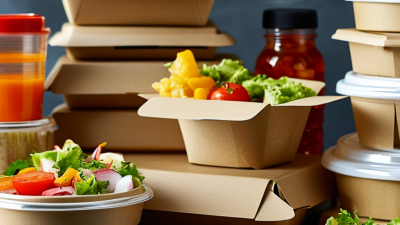
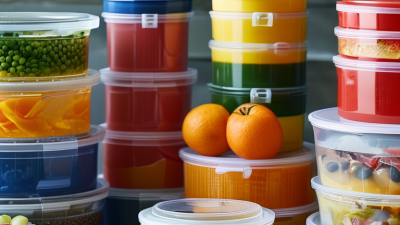
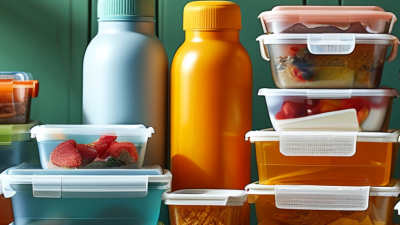
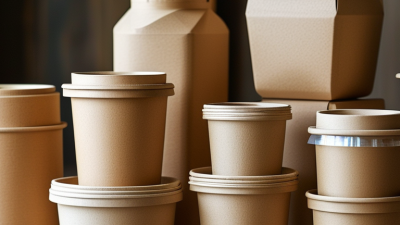
Thinking about sourcing Food To-Go Containers from China? You're definitely not alone — China has become a go-to place for many wholesale buyers looking for top-quality options. Their factories are pretty versatile, offering a wide range of materials, customizable designs, and solid production capacity. Whether you're after paper bowls, kraft boxes, bagasse trays, PET cups, or microwave-safe polypropylene containers, you'll likely find what you need. But hey, just because something's the 'best' doesn’t always mean it’s the cheapest option out there.
Industry reports back this trend, too. Markets like the global foodservice packaging scene are still growing, mainly thanks to increased delivery services, takeout orders, and all those shifts in consumer habits. Also, keep an eye on sustainability; companies like Smithers are highlighting recyclable and eco-friendly packaging as key trends through 2028. That said, these forecasts are helpful guides, but I wouldn’t take them as gospel — markets can be unpredictable.
Lynn Dyer, who used to be the president of the Foodservice Packaging Institute, put it simply: “Foodservice packaging is part of the customer experience.” That really hits home, especially when you’re dealing with suppliers in China and buyers from all over the world. Your containers need to resist leaks, keep food’s texture just right, stack easily, and print consistently. Honestly, spending a bit more per unit can save a lot in the long run — damaged shipments, flimsy lids, or rejected batches can rack up costs pretty fast.
Smart buyers will ask for detailed material specs, food-contact safety docs, factory audits, and actual sample tests. Test sealing with greasy foods, hot soups, and chilled desserts — those are your real challenges. Also, don’t forget to check how cartons hold up under warehouse pressure. Sometimes those little details make all the difference.
Keep in mind, a fancy-looking sample often doesn’t perform well when scaled up. A dependable supplier should be upfront about their production tolerances, testing processes, minimum order requirements, and lead times. And make sure they’re clear on import rules, recycling laws, labeling, and food safety standards in your target market. Finding a good Chinese supplier isn’t just about price — it’s about balancing affordability, safety, usability, proof of quality, and reliability for the long haul.
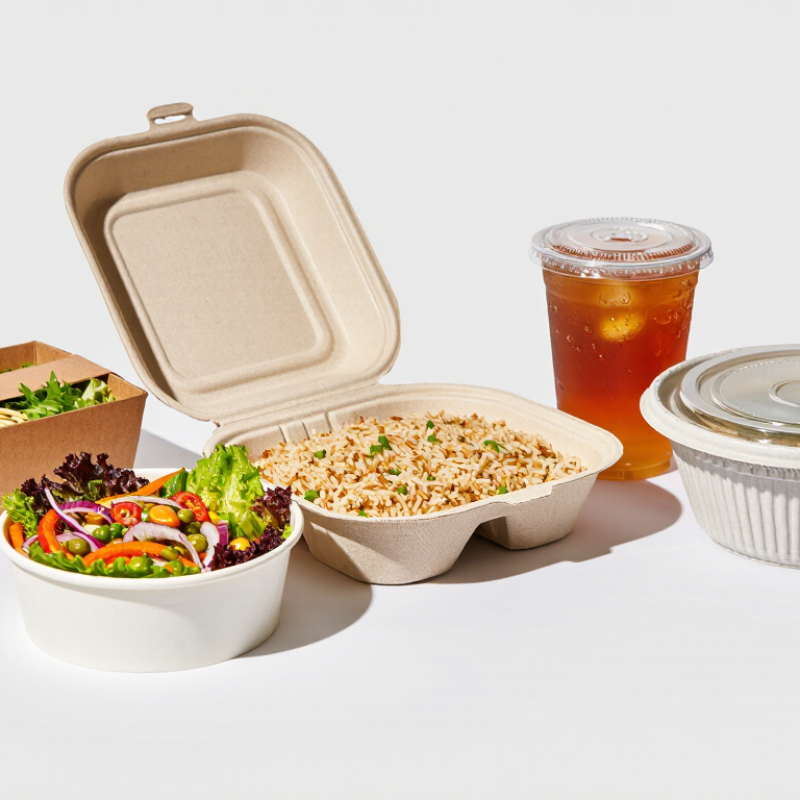
Define Wholesale Needs by 500–1,000 mL Capacity and 2–3 Compartments
Wholesale food buyers often start with capacity, but the right size depends on the meal itself. For rice bowls, pasta, and mixed salads, 500–1,000 mL containers cover many daily orders. A 500 mL box suits lighter lunches. A 1,000 mL box handles generous portions without forcing the lid upward. Measure real servings before placing a large order. Guesswork becomes expensive.
Two or three compartments can separate rice, vegetables, sauces, and proteins. This helps preserve texture during delivery. Three sections work well for balanced meal sets. Two sections may offer better value for simpler menus. Check each divider with liquid foods, not only dry samples. Small leaks can damage customer trust. I have seen attractive designs fail during stacking.
For wholesale sourcing, review dimensions, lid fit, carton quantity, and nesting efficiency. Ask for food-contact documentation and sample testing records. Reliable suppliers should explain material performance clearly. Look for Eco Friendly Togo Containers when reducing unnecessary packaging is part of your purchasing plan. However, “eco friendly” should not be accepted without evidence. Check the material description, disposal guidance, and production claims. A lighter container may reduce shipping weight, yet it can feel weak with hot food. That trade-off deserves honest testing. Keep several samples overnight, then inspect warping, odors, and compartment separation. Bulk savings matter, but consistent performance matters more.
China Food Togo Containers for Wholesale Buyers
Equal-Volume Planning for 500–1,000 mL Containers with 2–3 Compartments
The chart shows the nominal volume available per compartment when each container is divided into equal sections.
Values are calculated by dividing total container capacity by two or three compartments. Actual usable volume may vary
slightly because of compartment walls, sealing space, and product design.
Compare PP, PET, Paperboard, and Bagasse by Heat and Barrier Data
China’s best takeaway containers depend on heat, moisture, and transport time. PP usually handles 100–120°C food contact better than standard PET. PET offers clearer presentation and stronger oxygen protection, but many grades soften near 60–70°C. Do not use ordinary PET for very hot meals without supplier validation. Paperboard resists heat only through its coating. Bagasse handles hot food well, yet steam can weaken its structure. FDA Food Code 2022 sets hot holding at 57°C, a useful reference for wholesale testing.
Barrier results need more attention than material labels.
ASTM F1249 measures water-vapor transmission, while ASTM F1927 measures oxygen transmission. Coated paperboard can perform well, but damaged folds expose weak points. Bagasse often absorbs sauces after several hours. PP normally protects moisture better. PET generally provides better oxygen resistance. These are typical tendencies, not guaranteed specifications. Manufacturing quality changes everything.
Tips:
Request test sheets for heat resistance, WVTR, and OTR. Ask for results at the intended thickness. Test curry, soup, and oily rice in real delivery conditions.
Eco Food Containers
should also show compostability evidence, not only a green appearance.
One difficult truth: “compostable” does not mean home-compostable. I would also question any supplier promising leak-proof performance without time and temperature data.
Verify Food-Contact Compliance with GB 4806, FDA 21 CFR, and EU 10/2011
Wholesale buyers should treat compliance as a purchasing requirement, not a paperwork exercise. Food-contact containers must match their intended food, temperature, and contact time. China’s GB 4806 framework covers general safety and material-specific requirements. For exports, FDA 21 CFR controls permitted substances and conditions of use. EU 10/2011 requires plastic materials to meet migration limits and use authorized substances.
Ask for recent migration-test reports, declarations of compliance, and production-lot traceability. Testing should reflect real conditions, such as hot soup, oily noodles, or frozen meals. A report for room-temperature water is not enough. It may look professional. It may still be irrelevant. I would also verify testing laboratories and sample descriptions, because small material changes can alter results.
The OECD Global Plastics Outlook reports that global plastic production reached 460 million tonnes in 2019, while packaging represented about 40% of plastic use. That scale explains why regulators scrutinize food packaging closely. UNEP’s Turning off the Tap report projects that global plastic pollution could be reduced by 80% by 2040 through better design, reuse, and controls. For wholesale sourcing, choose containers with clear resin identification, stable specifications, and documented compliance for every material layer. Do not rely on one old certificate. Ask for updates when formulas, suppliers, colors, or manufacturing sites change.
Check Compostability Claims Against ASTM D6400 and EN 13432 Standards
Wholesale buyers often source Food Bowl Containers from China, but compostability claims need careful verification. ASTM D6400 and EN 13432 apply to industrial composting, not backyard piles or ordinary landfills. Both frameworks examine disintegration, biodegradation, compost quality, and material safety.
Under EN 13432, packaging should disintegrate by at least 90% within 12 weeks. It should also achieve 90% biodegradation within 180 days under controlled testing. ASTM D6400 uses comparable timeframes, while also checking ecotoxicity and regulated metals. A certificate alone may not prove the finished bowl performs identically. Ink, coatings, lids, and adhesives can change the result. This is where buyers often overlook details.
The 2023 UNEP Turning off the Tap report states that global plastic pollution could fall by 80% by 2040 through reuse, recycling, and better material choices. That figure is encouraging, but compostable packaging only works when collection systems accept it. Ask suppliers for complete test reports, laboratory accreditation, product samples, and batch traceability. Check whether the report covers the exact Food Bowl Containers being shipped. Not just the resin.
Tips: Request ASTM D6400 or EN 13432 evidence for the complete package. Confirm the testing laboratory and report date. Ask for migration, heavy-metal, and disintegration results. Also, print clear disposal instructions on cartons. “Compostable” without infrastructure can confuse customers. I have seen attractive claims fail at the local-bin stage. Keep questioning the claim.
China Best Food To-Go Containers for Wholesale Buyers? — Check Compostability Claims Against ASTM D6400 and EN 13432 Standards
| Container Material |
Typical Food-Service Use |
ASTM D6400 Position |
EN 13432 Position |
Evidence a Wholesale Buyer Should Request |
Important Purchasing Caveat |
| Molded bagasse or other plant-fiber pulp |
Meal boxes, clamshells, plates and bowls for hot or chilled foods |
Can comply when the complete finished article, including coatings, additives, inks and adhesives, meets the specification. Fiber content alone is not sufficient proof. |
Can comply when the finished product passes disintegration, biodegradation, ecotoxicity and constituent requirements. |
Product-specific test report or certificate; declaration of composition; coating and additive information; sample matching the tested construction |
Water- or grease-resistant coatings may change the compostability result. Verify performance at the intended basis weight and temperature. |
| Uncoated or aqueous-coated paperboard |
Sandwich boxes, bakery packs, wraps and dry-food cartons |
May meet ASTM D6400 if the coating, printing system and adhesive are included in the tested final product. |
May meet EN 13432 if the full packaging item passes the standard's material and compostability tests. |
Full-product laboratory report; coating chemistry; ink and adhesive declarations; food-contact compliance documents where applicable |
“Paper” or “recyclable” does not automatically mean “compostable.” Polymer or fluorinated grease barriers require close review. |
| PLA or other certified compostable bioplastic |
Cold-food containers, clear lids, cups and selected packaging formats |
Possible only when the specific resin, formulation and finished article meet ASTM D6400. Resin-level claims do not automatically cover the container. |
Possible only when the complete item meets EN 13432, including disintegration and biodegradation requirements. |
Certificate or test report identifying resin grade, thickness, colorants, additives, lid and container construction |
Many PLA products require industrial composting conditions and are not suitable for home composting or ordinary recycling streams. |
| PHA or other certified compostable bioplastic |
Selected food containers, films and lids, depending on the formulation |
May qualify, but compliance depends on the exact polymer blend, additives, thickness and finished product. |
May qualify when the complete packaging item satisfies EN 13432 testing and chemical limits. |
Independent laboratory report; composition statement; certificate scope; batch or product identification |
Do not rely on the polymer name alone. Confirm that the certificate covers the exact dimensions, colors and accessories ordered. |
| Conventional PP or PET |
Reusable or disposable food boxes, deli containers and clear lids |
Not compostable under ASTM D6400 merely because it is recyclable, recyclable-content, bio-based or degradable under another test method. |
Does not meet EN 13432 as conventional packaging material. |
Material identification and recycling documentation rather than compostability certification |
Avoid compostable labeling unless a valid certificate covers the complete product. Recycling instructions should be kept separate from composting claims. |
| Paper or fiber with an unspecified grease barrier |
Fried-food boxes, takeaway trays and oily or saucy meals |
Status cannot be confirmed without identifying and testing the barrier layer, inks and adhesives under the finished-product configuration. |
Status cannot be confirmed without complete-product testing and documentation of restricted substances and additives. |
Barrier specification; fluorine/PFAS statement where relevant; finished-product test report; food-contact documentation |
A supplier's statement such as “eco,” “green” or “biodegradable” is not equivalent to ASTM D6400 or EN 13432 compliance. |
Standard checkpoints for wholesale evaluation:
- ASTM D6400 and EN 13432 address industrial compostability; neither standard by itself guarantees successful home composting.
- Both frameworks require testing of the relevant finished packaging construction, not just the base fiber or resin.
- Typical benchmark requirements include substantial biodegradation within a defined test period, disintegration during industrial composting, and no adverse effect on compost quality.
- EN 13432 additionally includes requirements concerning constituent substances, including specified limits for heavy metals and other elements.
- For an import order, match the certificate scope with the exact container, lid, coating, ink, adhesive, color, thickness and packaging configuration being purchased.
Test Leak, Seal, Stack, and Drop Performance Using ISO Methods
China Best Food To-Go Containers for Wholesale Buyers?
A reliable container should survive more than a clean showroom test. In our quality checks, we fill each unit with colored water, close the lid, and invert it for a timed leak inspection. We also press the sealed edge gently by hand. Small channels often appear near corners. That detail matters during delivery.
For seal performance, test samples after refrigeration and warming. Temperature changes can expose weak lid fits. Record closing force, visible gaps, and liquid loss by weight. Use applicable ISO packaging procedures, while documenting any food-container adaptations. This makes results easier to repeat and compare between suppliers.
Stacking tests should reflect real warehouse conditions. Load filled containers in aligned and offset piles, then measure height loss and lid deformation. Compression testing can follow ISO 12048 principles when the packaging format is suitable. For impact resistance, use ISO 2248 drop-test guidance. Drop samples from a defined height onto a hard surface, using several orientations. Inspect cracks, detached lids, and hidden seal damage.
Not every result is perfect.
A container may pass a single drop but fail after repeated handling. A strong seal may still deform under heavy stacking. Wholesale buyers should request raw measurements, sample counts, conditioning details, and photographs. One test is never enough. Reliable purchasing decisions come from repeated evidence, honest failure records, and tests that match actual transport conditions.
Calculate Landed Cost from Unit Price, Tooling, Freight, and 13% VAT
For wholesale buyers comparing Fast Food Containers, the unit price is only the visible part of the cost. A reliable landed-cost worksheet should include the container price, tooling, freight, and 13% VAT. For example, 10,000 containers at $0.08 cost $800. A $600 mold adds $0.06 per container when used for this order. Freight adds $900.
The pre-VAT amount is therefore $2,300, or $0.23 per unit. If 13% VAT applies to that full taxable base, VAT equals $299. The estimated landed cost becomes $2,599, or about $0.26 per container. Check the tax base carefully. Customs treatment, delivery terms, and tooling ownership can change the calculation.
In practice, I keep separate columns for reusable tooling and one-time charges. This prevents a low first-order price from looking better than it really is. Freight quotes also need detail: port handling, insurance, inland delivery, and possible storage charges may sit outside the headline figure. Small errors matter. A $0.01 difference across 100,000 units means $1,000. My own early estimates sometimes missed local handling fees, so I now request a line-by-line quotation and confirm whether the 13% VAT is recoverable. The cheapest quote is not always the safest purchasing decision.
Rank China Suppliers by MOQ, Certifications, Lead Time, and Customization
China’s Best Food To-Go Containers for Wholesale Buyers
Wholesale ranking should begin with MOQ, not price. Rank A suppliers usually accept 5,000–10,000 units, offer food-contact declarations, ISO 9001 systems, and 15–25 working-day lead times. Rank B suppliers often support 1,000–5,000 units, with 20–35 working-day production and moderate printing options. Rank C suppliers may accept fewer than 1,000 units, but customization is usually limited to labels, colors, or stock molds. These are practical screening ranges, not fixed market rules.
Certification needs careful checking. The 2023 ISO Survey recorded 1,265,216 ISO 9001 certificates worldwide, yet ISO 9001 does not prove food-contact safety. Buyers should request migration-test reports, material specifications, and certificates matching the destination market. Relevant references include EU Regulation 1935/2004, FDA food-contact requirements, and, where applicable, LFGB testing. UNEP’s Food Waste Index Report 2024 estimated 1.05 billion tonnes of food waste in 2022. Leak resistance and secure lids therefore deserve testing, not just attractive catalog photos.
For custom containers, Rank A suppliers usually provide mold development, color matching, and sample approval, but tooling can add 20–45 days. Rank B suppliers may customize faster through existing molds. Rank C is better for simple, urgent orders. I would inspect samples with hot food, oil, stacking pressure, and transport vibration. A perfect certificate folder can still hide weak sealing. That is an uncomfortable, but useful, purchasing lesson.
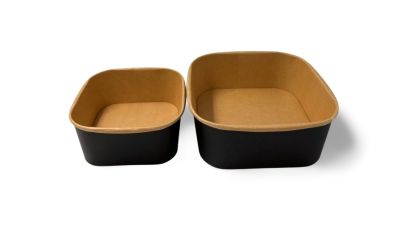
KS Square Series: Stylish, Sustainable Black Printed Kraft Containers for Takeaway Food Packaging
The square kraft takeaway container is designed for foodservice operators seeking a balance between presentation, practicality, and sustainability-minded packaging choices. Its black printed paper exterior creates a modern, premium appearance, while the clean square profile supports efficient portion presentation for salads, rice dishes, noodles, pasta, poke bowls, and prepared meals. Available in 500ml, 750ml, 1000ml, and 1300ml capacities, the range can serve individual portions as well as larger meal combinations. According to Grand View Research’s 2024 foodservice packaging analysis, the global market was valued at approximately USD 84.33 billion in 2023, reflecting strong demand for convenient takeaway solutions.
Inside, PE-coated kraft paper helps resist leaks and grease, making the containers suitable for hot, chilled, and saucy foods. Optional PET lids provide secure coverage for delivery, reducing the risk of spills during transport and supporting clearer product visibility. The United Nations Environment Programme’s 2024 Food Waste Index Report estimated that 1.05 billion tonnes of food were wasted globally in 2022, highlighting the importance of practical portion control and dependable food handling throughout the takeaway process. Packed at 300 pieces per carton, these containers are convenient for restaurants, caterers, meal-preparation businesses, and food packaging distributors requiring consistent stock across multiple serving sizes.
FAQS
Verify material compliance, intended food use, temperature, and contact time. Ask for recent migration-test reports and declarations of compliance.
China’s GB 4806 framework covers general and material-specific safety requirements. FDA 21 CFR and EU 10/2011 may apply to exports.
Food creates different conditions. Hot soup, oily noodles, and frozen meals can affect migration and container performance. Room-temperature water is insufficient.
Request migration reports, material specifications, declarations, and production-lot traceability. Check the laboratory and sample description carefully.
Compare minimum order quantity, certifications, lead time, customization, and testing quality. A cheaper quote may create slower approvals or higher risk.
Larger suppliers may accept 5,000–10,000 units with 15–25 working-day lead times. Smaller suppliers may accept under 1,000 units with limited customization.
No. A quality-management certificate does not prove migration compliance. Buyers still need material-specific tests and destination-market documents.
Test samples with hot food, oil, stacking pressure, and transport vibration. Check lid sealing by hand. Catalog photos can mislead.
Request updates when formulas, suppliers, colors, or manufacturing sites change. One old certificate may no longer match the product.
Choose clear material identification, stable specifications, secure lids, and suitable container sizes. Better design helps, but my assumptions may still need testing.
Conclusion
For wholesale buyers, selecting the best China Food Togo Containers requires more than comparing unit prices. Start by defining the required capacity, typically 500–1,000 mL, and deciding whether one, two, or three compartments are needed. Compare polypropylene (PP), PET, paperboard, and bagasse according to heat resistance, oil and moisture barriers, durability, and intended food applications. Confirm food-contact documentation against GB 4806, FDA 21 CFR, and EU 10/2011 requirements, while checking compostability claims against ASTM D6400 and EN 13432 standards.
Before placing an order, conduct practical tests for leakage, sealing strength, stacking stability, and drop resistance using suitable ISO-based methods. Calculate the true landed cost by including the unit price, tooling, freight, customs-related expenses, and 13% VAT. Finally, evaluate suppliers by MOQ, verified certifications, production lead time, customization capability, sample quality, and communication reliability to identify a dependable long-term manufacturing partner.
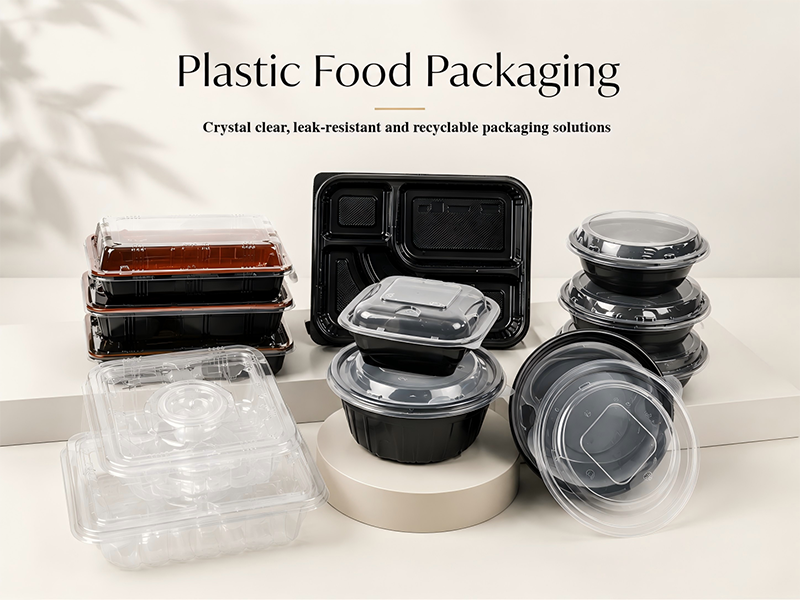 Recyclable Plastic Food Packaging
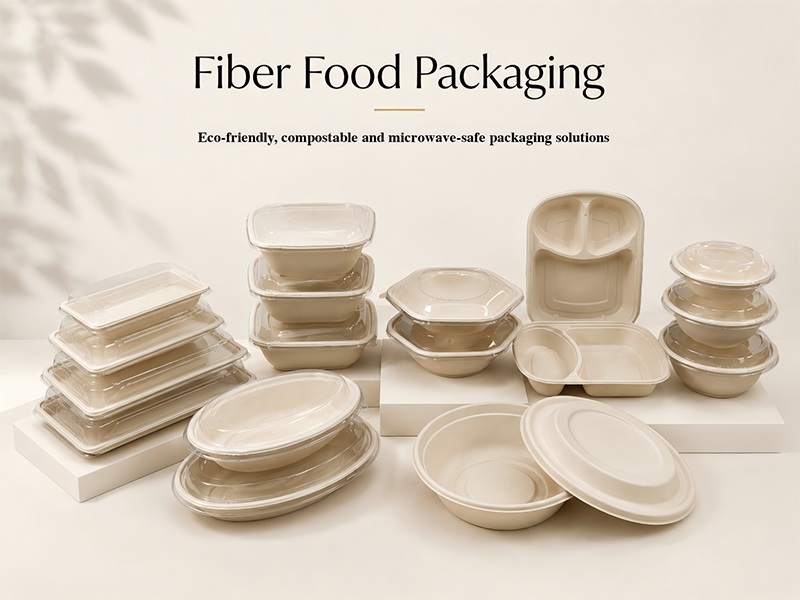 Compostable Fiber Food Packaging
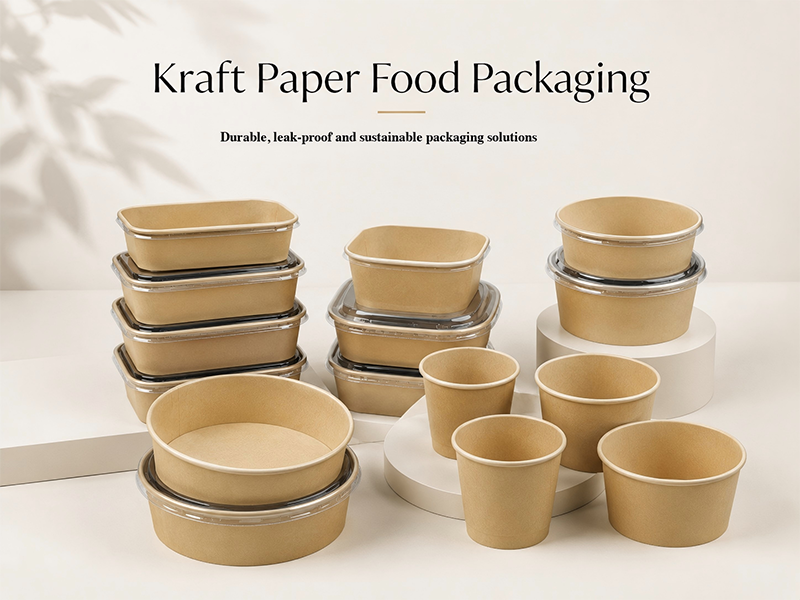 Recyclable Kraft Paper Food Packaging
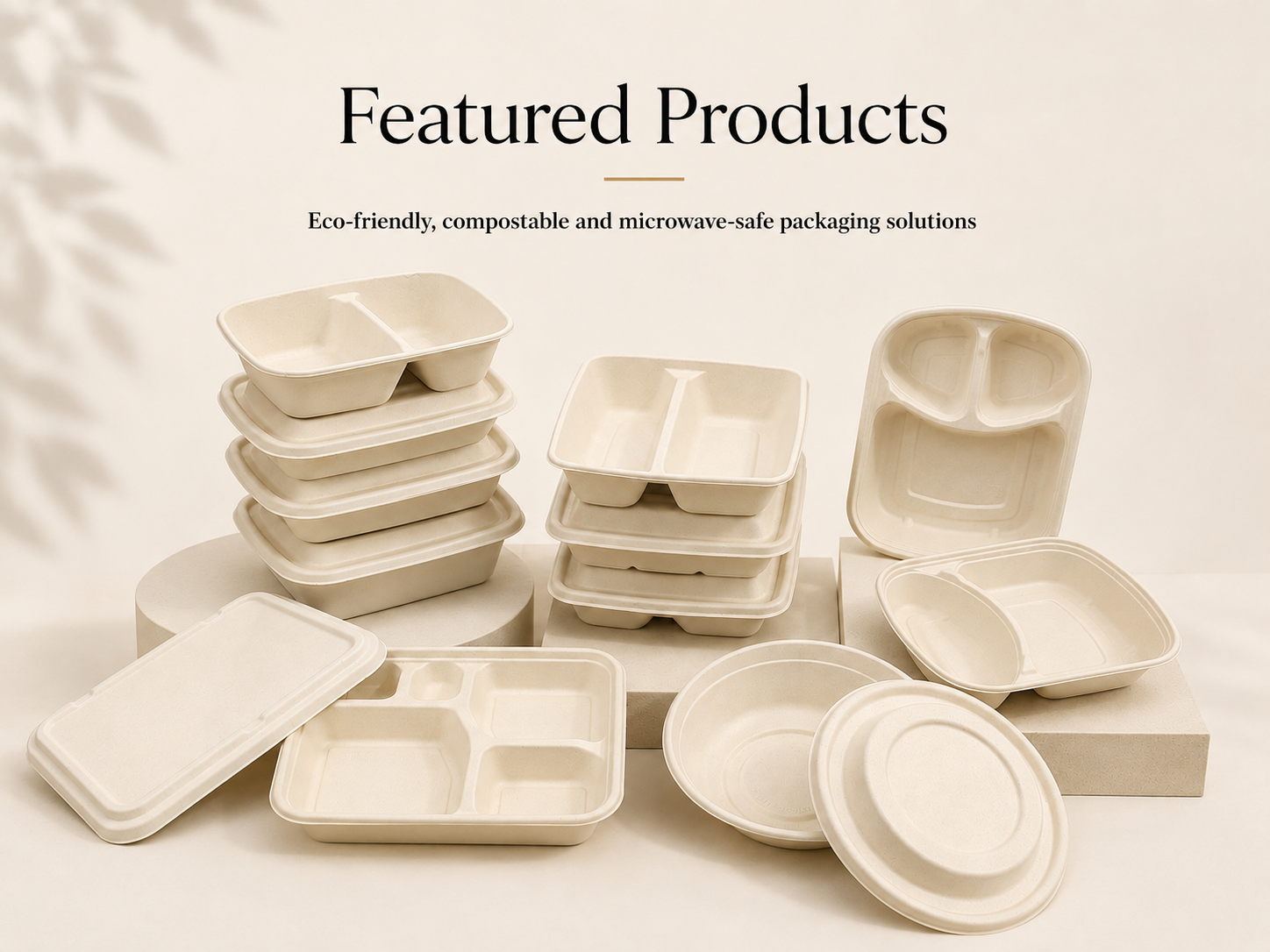 Featured Products
 +86 18024107061
 Contact via email